
How do porta potties work?
The setup is simpler than most people expect. Waste and a blue deodorizing chemical sit in the tank below the seat. That chemical breaks down solids and knocks back smell between service visits. A vent pipe runs to the roof of the unit and pulls odor up and out instead of letting it sit in the stall. There's no plumbing, no water tank, no flush handle on a standard unit. You use it, close the lid, and the tank holds everything until the truck comes. A standard unit runs about 44 by 48 inches on the ground and stands roughly 92 inches tall, so it fits in tight spots on a Gulfport job site without eating up staging area. For a construction worker running to a porta potty between tasks, that footprint matters. Placement matters too. Gulfport Porta Pros looks at ground slope, wind direction and truck access before drop-off, which is covered in more depth on the porta potty placement guide. If you're not sure how many you need for a crew, the how many porta potties do I need page walks through the math.
How does portable sink work?
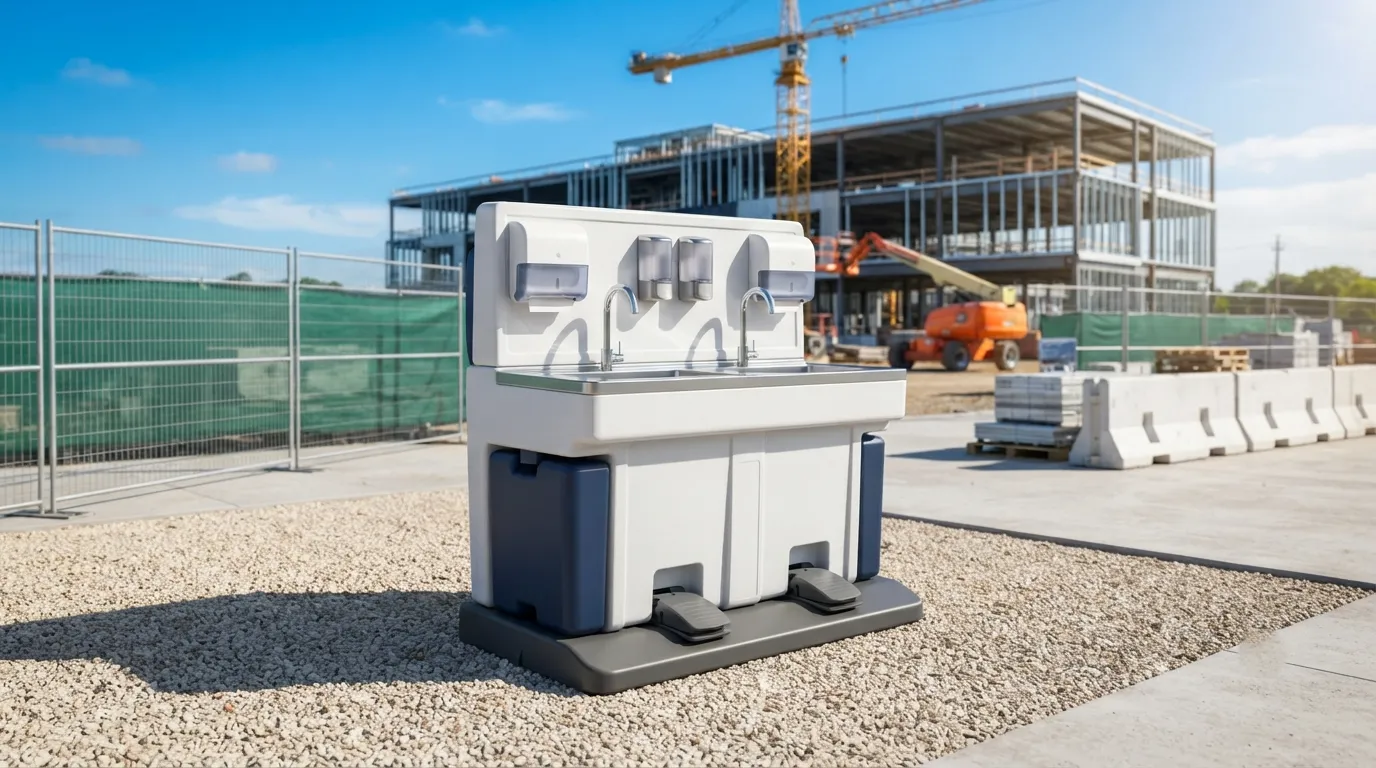
A portable sink runs on the same no-hookup principle as the toilets. It carries its own fresh water in a built-in tank, usually with a foot pump or hand crank that pushes water through the faucet, and a separate tank underneath catches the greywater. Soap and paper towels sit in dispensers on the unit. That setup matters because 29 CFR 1910.141(d)(2) requires washing facilities to have soap and towels or a hand drying device, and hand sanitizer alone doesn't satisfy that. Crews near paint booths, herbicide mixing stations or anywhere coatings and insecticides get applied fall under OSHA 1926.51(f)(1), which specifically calls for washing facilities in those contaminant situations. A handwashing station rental or portable sink rental covers both cases. Some crews add a hand sanitizer station as backup, but it's a supplement, not a substitute for soap and water under the federal standard.
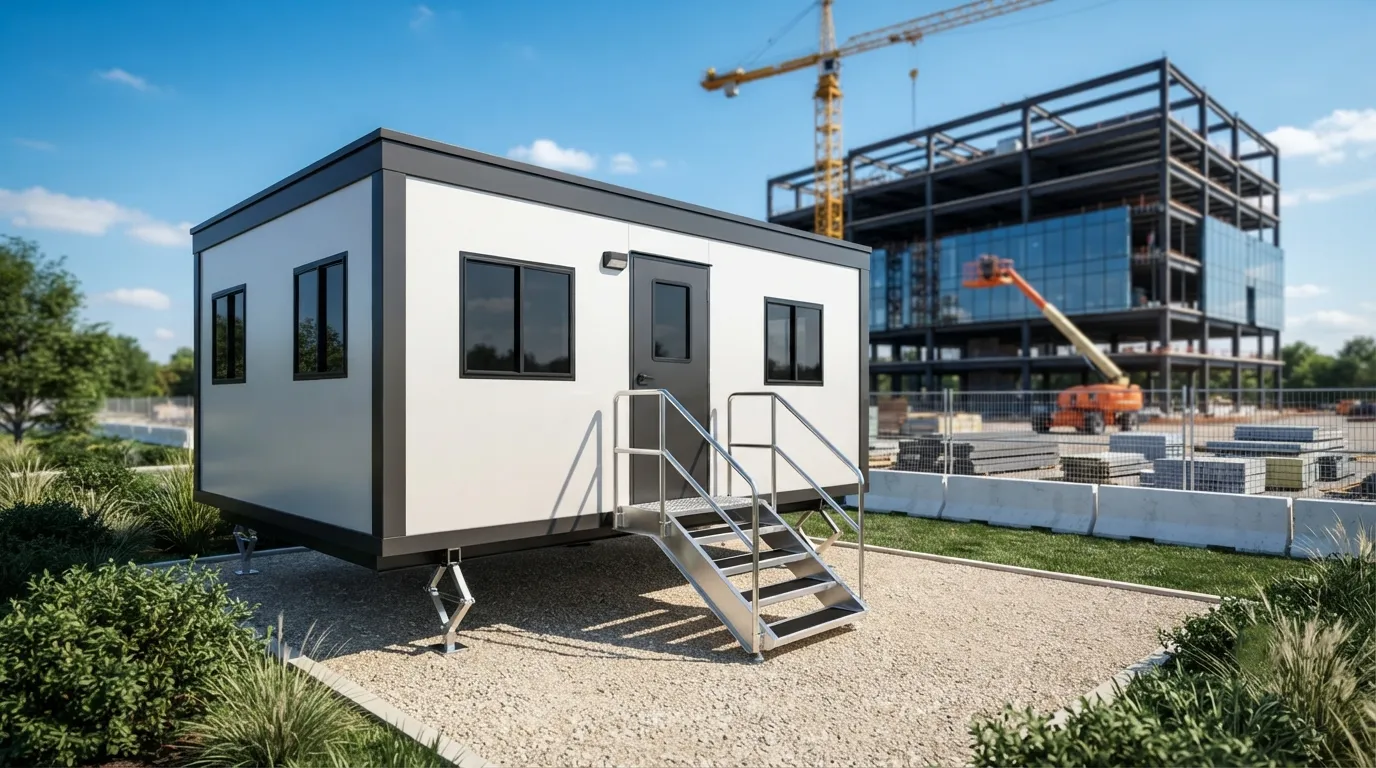
How do flushable porta potties work?
A deluxe flushable unit uses a small onboard freshwater tank and a hand pump or foot pedal to push a rinse of water into the bowl after each use, which drops it into the same holding tank below. It feels closer to a bathroom at home. There's still no sewer connection, so the tank still needs regular pumping, but the flush cuts down on odor and buildup between services. These units also tend to run a bit larger and better finished than a standard stall, which is why they show up at weddings and corporate events around Gulfport instead of job sites. The deluxe flushable porta potty page has specs and photos. For accessible flush units, ADA Standards section 404.2.3 sets a 32 inch minimum clear door opening, and section 304.3.1 calls for a 60 inch turning circle inside, both covered on the ADA accessible porta potty page. Larger events sometimes skip individual stalls entirely and go with a restroom trailer rental, which runs multiple flushable stalls off one water and holding system.
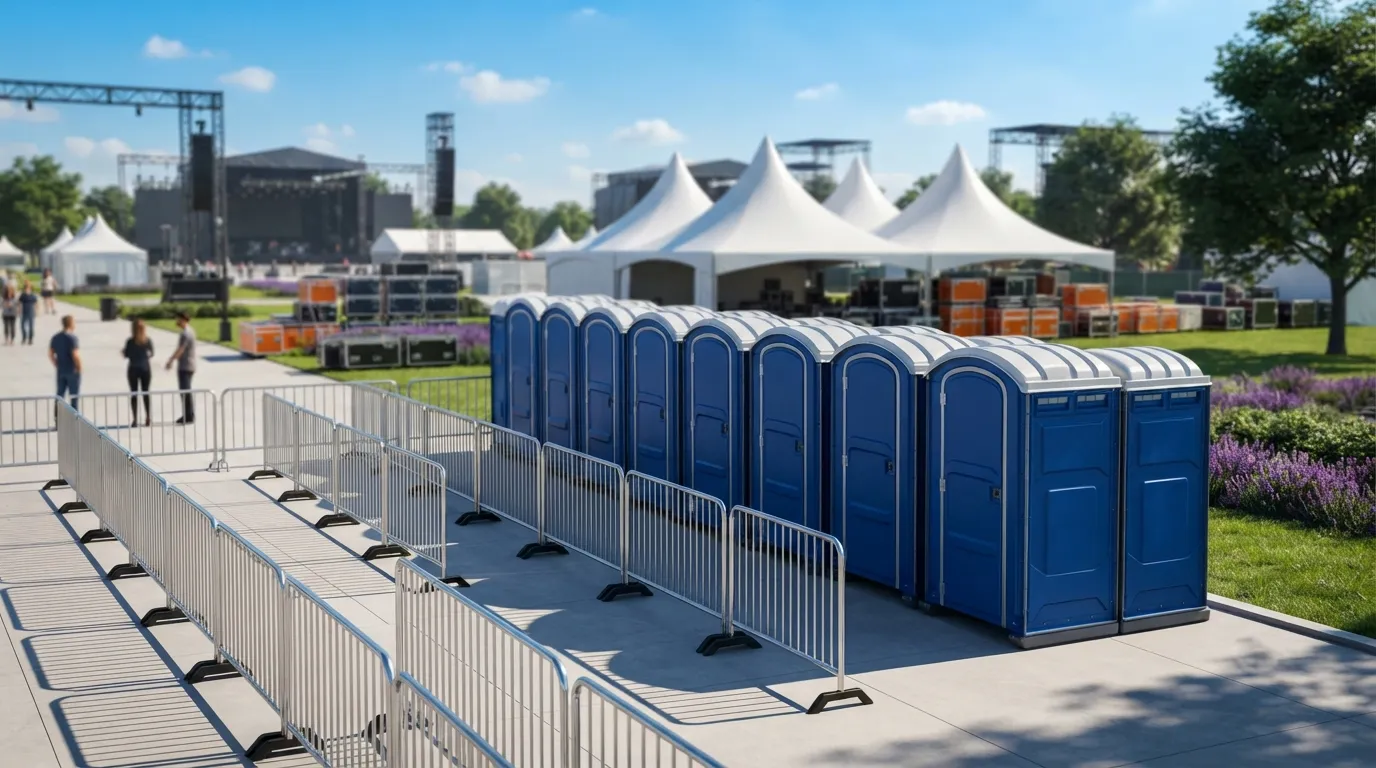
How do camping porta potties work?
Camping and event units work the same way as a job site standard, just without the crew wear and tear. Tank, seat, vent stack, chemical treatment, done. For a weekend camping trip or a backyard gathering, a single unit near Lyman or Long Beach usually covers a small group, since Lyman sits about 9.2 miles northwest of Gulfport and Long Beach about 10.6 miles southwest, both within easy delivery range. The chemical used matters more than people think. A quality portable toilet chemical breaks down waste, controls odor and keeps the tank from foaming during transport, which is why asking for portable toilet chemicals near me isn't just about smell control. It's about tank performance on pump day. Event organizers running multi-day festivals should check the festival restroom rental or camping porta potty pages for service intervals, since ANSI/PSAI Z4.3 sets one weekly service visit as the baseline for up to 10 users over a 40 hour week, and heavier weekend traffic needs more frequent pumping than that.
Frequently Asked Questions
Do porta potties need a water hookup?
No. Standard units carry no water line at all, and even flushable models use an onboard tank instead of a sewer connection. That's the whole appeal for Gulfport job sites and events without utility access. Details on how the tank and flush system work together are on the how do porta potties work diagram reference and the portable toilet rental page.
How often do porta potties get serviced?
ANSI/PSAI Z4.3 sets a baseline of one visit per week for up to 10 users across a standard 40 hour week. Busy construction crews or weekend events usually need more frequent pumping. Gulfport Porta Pros schedules around actual headcount rather than a fixed calendar, which is covered further on how often are porta potties cleaned.
How many porta potties does a job site need?
OSHA 1926.51(c) sets ratios by crew size: one toilet for 20 or fewer workers, adding a toilet and urinal per 40 workers above that. A 25 person crew needs at least two facilities under that standard. Full breakdowns sit on the OSHA portable toilet requirements page.
Do porta potties smell bad?
Not when serviced on schedule. The blue chemical in the tank breaks down solids and blocks odor, and the vent stack pulls remaining smell up and away from the stall. Skipped service intervals are the usual cause of smell complaints, not the units themselves. More on this at do porta potties smell.
What is the difference between standard and flushable units?
A standard unit has no flush and no water tank, just the holding tank and chemical treatment. A flushable unit adds an onboard freshwater tank and a hand or foot pump to rinse the bowl after use. Both still need scheduled pumping. Compare them on the standard porta potty rental and deluxe flushable porta potty pages, or check current porta potty rental cost for both.
Next step
Get a delivery date
Tell us the address, the dates and the headcount. We size the order and confirm the route.